
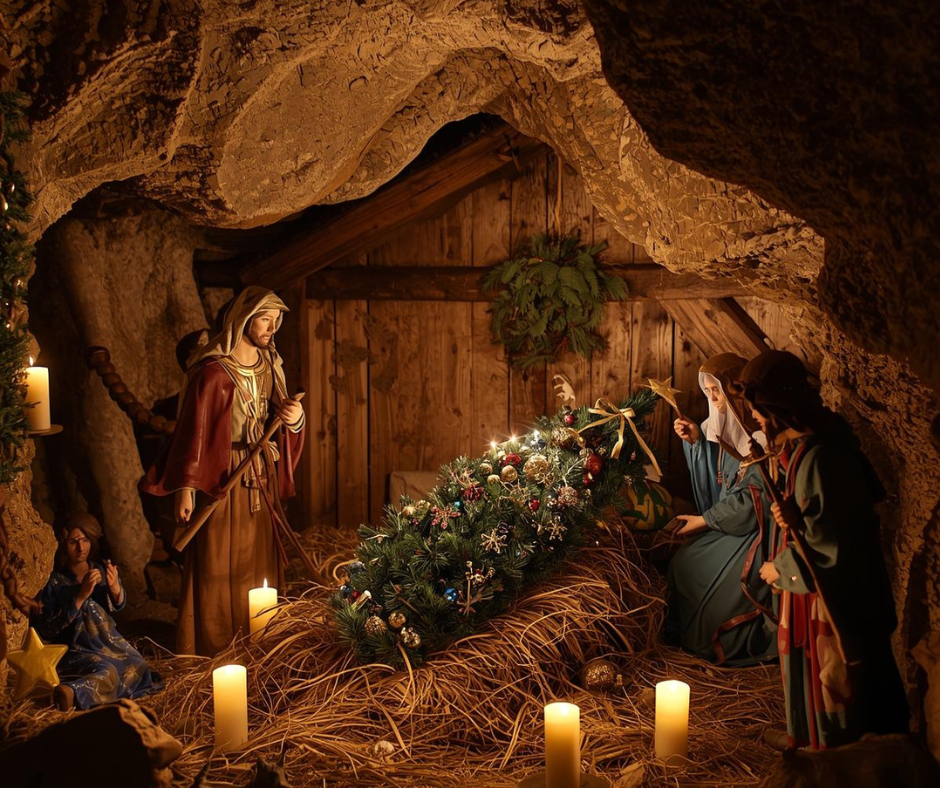
Imagine if every birthday, wedding anniversary, or national triumph got shuffled to the nearest Monday—not because the joy or event wasn't real, but for the sheer convenience of a tidy schedule. The event did happen; it does matter. Yet, in that shift, the raw pulse of the original moment fades a bit, doesn't it? The cake gets cut amid the Monday blues, the toasts blur into routine, and what was once a sacred pause becomes just another slot in the planner. It's a soft loss, like trading a handwritten letter for a quick emoji. And so it goes with December 25th, our twinkling tribute to the birth of the King who stepped into our mess to mend all creation. The truth of Emmanuel—God with us—remains as solid as Bethlehem's starlit night. But oh, how the date's detour has dressed it in elf hats and sleigh bells, turning a holy disruption into a holiday hustle.
This isn't about scolding the sparkle; it's a whisper to wonder: What if we leaned back into the original story, the one etched in ancient rhythms rather than Roman calendars? As I mused in exploring "Hijacked Time," our modern feasts often echo King Jeroboam's sly pivot in 1 Kings 12—crafting golden calves and alternate altars not to honor God, but to keep the people from Jerusalem's truth, lest their hearts wander from his (Jeroboam's) throne. "Calendar changes," it notes gently, "divorce us from biblical observances, populating the year with feasts that copy the treachery: convenient, captivating, but utterly disloyal to the Creator's clock." Christmas, perched on the winter solstice to eclipse pagan parties, carries that same subtle shift. The real nativity? A scandalous "yes" from a teenage Mary amid whispers and donkey rides, birthing the Lamb who would restore heaven's order to our fractured world (Genesis 3:15 fulfilled in Luke 1:26–38). Yet lore layers on: flying reindeer over Roman fertility rites, egg hunts nodding to Easter's borrowed bunnies. It's like celebrating a coronation with clown shoes—charming, but missing the crown.
Here's a quotable nudge: Holy days, set apart for heaven's gaze, morph into holidays when self-gifts steal the stage from the Savior's grace. Or this: Santa's list tracks who's been nice; the King's ledger invites the naughty to return home, no coal required. These feasts of the heart—Rosh Hashanah's trumpet call to awaken, Yom Kippur's atonement embrace—rehearse Jesus not as a jolly guest, but the King whose blood seals our pardon and whose return will make all things holy again (Leviticus 23; Hebrews 9:28). In the "Messy Christmas" reflection, it's the chaos of that stable that calls us: not cozy carols alone, but stepping into God's wild redemption, where elves fade but the eternal Light endures. Contrast the elf-ridden frenzy of "getting" with the Teshuvah trail of "returning"—a 40-day stroll through Elul's soul-searching, culminating in feasts that echo Jesus' wilderness victory and John's baptizing cry: Repent, for the Kingdom draws near (Matthew 3:2; 4:17). One quip to linger on: While holidays hollow out with hollow laughs, holy days fill us full—with the One who turns our Mondays into eternal mornings.
And here's the heart's quiet pull: Jesus in his feasts' context—the apocalyptic pulse of trumpets and atonement, the spring harvest of resurrection and Spirit fire—is infinitely more magnetic than any North Pole knockoff (see "The Apocalyptic Nature of Time" for that cosmic rhythm). He doesn't just decorate the season; he reclaims it, inviting us from counterfeit comfort to the Creator's feast. Why not peek at those ancient appointments this year? Trade a bit of tinsel for a trumpet blast, and watch how knowing the King—who restores creation's holiness—turns even a misplaced December into a doorway home. After all, the original was never about convenience; it was about coming close. What might you discover if you did?
