But Teshuva does not permit us to stand across the street and critique the house.
If we belong to Yeshua, this is our house.

But Teshuva does not permit us to stand across the street and critique the house.
If we belong to Yeshua, this is our house.
We began with our own location on the road of return. Last week we searched the inner rooms—the desires, defenses, words, idols, and explanations that can hide what is actually happening in the heart.
Now we cross the threshold.
Teshuva comes home.
Before examining our households, our congregations, Israel, or the nations, we stood where Adam stood and allowed God's question to become personal. Teshuva begins by telling the truth about where we are and then turning toward where God intended us to be.
Elul is the signal to turn our attention Godward, because His appointed times, His moedim (Lev 23:1-4), are close now. One practical expression of that focus: …
From Genesis to Revelation, Scripture tells the story of God reclaiming what belongs to Him.
And at the center of that story stands something most believers have never been taught to see clearly:
God’s calendar.
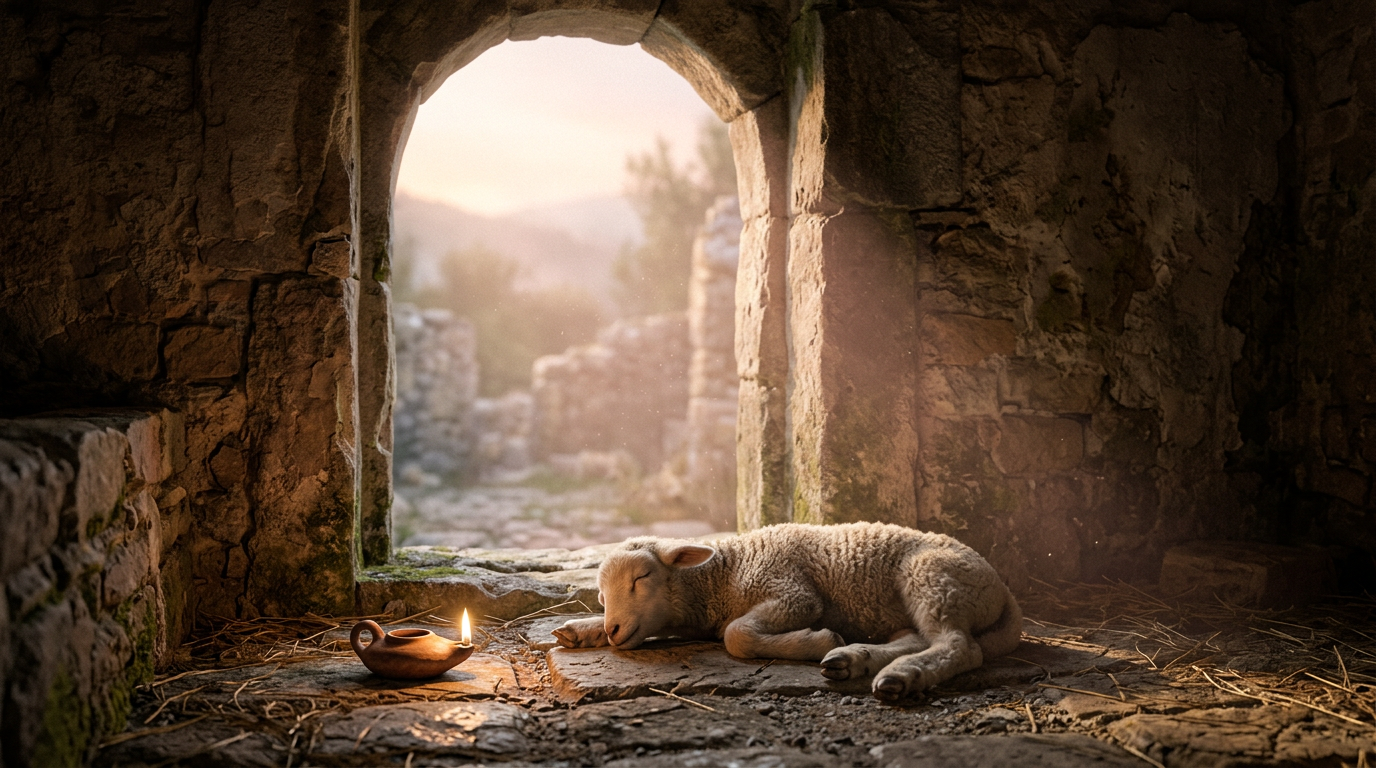
We have walked through the history, the shadows, and the symbols. We have measured the wall with the plumb line of the Tanach and cleared away the debris of centuries. But as the dust settles, we find ourselves standing before a quiet, garden tomb in the twilight mist of the third day.
If the powers of darkness had known—if they had truly understood the architecture of the Father’s heart—they never would have struck (1 Co 2:8). But they did. And in that moment of apparent defeat, the single act of history occurred by which the marred beginning was reversed.
Since the garden, all of creation was caught in a singular, terrifying momentum toward destruction. But at the empty tomb, that momentum was broken. The seal was not just moved; the curse was intercepted. Every story ever told—every longing for home, every hope for justice, every cry for life—was merely a rehearsal for this. All history prior flows toward and into that tomb; all history and hope following walked out of it.
This is the story the Passover was preparing us for. The One who brought order to the tohu vavohu of Ge 1:1 is the same Word who was with God and was God in the beginning (Jn 1:1-2). He stood in the gap to reverse the great fruit fiasco of Ge 3:15-16.
The Feasts of Yehoveh are not merely dates on a calendar; they are the spiritual nervous system of the restoration of all things.
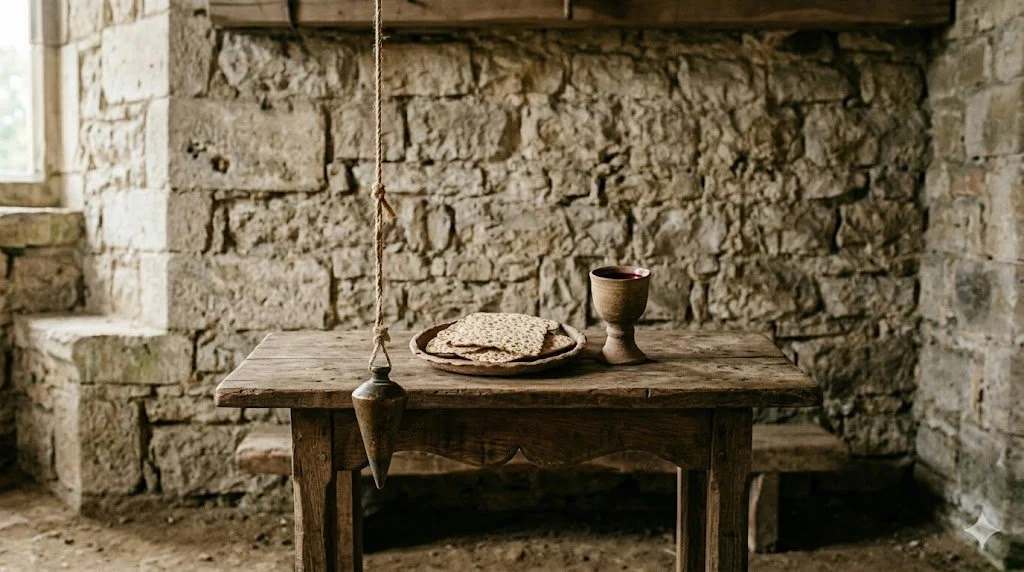
Passover & Unleavened Bread: The substitutionary sacrifice has been made. Yeshua, our Passover Lamb, has been sacrificed (1 Cor 5:7). We were taken out of Egypt by His blood, and now, we enter the week of Unleavened Bread—the season where we yield our lives to Him as He removes the "Egypt" from our own hearts.
Firstfruits: The seed that was planted in the earth did not stay there. He is the Firstfruit from the dead (1 Cor 15:20), the proof that the harvest of humanity has begun. Because He rose, we know the harvest is sure.
Shavuot (Pentecost): Fifty days later, the Fire that descended on Sinai to give the Torah descended again to write that Torah on hearts of flesh (Ac 2:1-4, Jr 31:33). It is the empowerment to live as citizens of the Kingdom while still in the diaspora of this world.
Yom Teruah (Trumpets): We listen for the blast. It is the announcement of the King’s approach. The Risen One is the Returning One (1 Th 4:16).
Yom Kippur (Atonement): The day of final reckoning and covering, where the High Priest emerges from the Holy of Holies to declare that the dwelling place of God is finally, fully cleansed.
Sukkot (Tabernacles): The end of all stories. The Great Rehearsal for the day when the dwelling place of God is with man (Rv 21:3). The earth restored, the curse forgotten, the King in our midst.
Seven feasts, largely forgotten, hold the key to all we believe in and hope for by the Word of God.
I look at the empty tomb and I don't just see a historical fact; I see my own future. Because He rose, I know I will too. This reality demands more than my intellectual assent—it demands my alignment. I want my life to be a rehearsal for His Kingdom. I want the rhythm of my days to beat in time with the Feasts that proclaim His plan.
The "Faith Once Delivered" is not a burden to be carried; it is a Person to be followed. It is the clarity that when everything else falls away, He remains.
He is risen. The Lamb has conquered. The tomb is empty. The King is coming.
Let the heavens rejoice and the earth be glad, for the Firstborn from the dead has claimed His inheritance! We do not celebrate a faded memory; we rehearse a coming glory. To the Lamb who was slain and is now seated on the throne—to Him be the blessing, the honor, the glory, and the power, forever and ever!
Amen.
Around A.D. 160, a bishop in Sardis preached the oldest surviving sermon on the resurrection feast. No eggs. No bunnies. No seasonal sentimentality. Just this:
"I am your freedom. I am the Passover of your salvation. I am the lamb slaughtered for you. I am your ransom. I am your life. I am your light. I am your resurrection. I am your king."
From the beginning, God created humanity to bear His Name and fill the earth with His glory. Rebellion profaned it—from Eden to Babel to Israel’s failure.
Through Yeshua, the perfect Image, that Name is restored and exalted above all. The Gospel announces: God’s original purpose is fulfilled—His dwelling with us forever (Rev 21:3).
This is not merely the conclusion of a counting of the omer (Lev 23:15-16) ; it is the culmination of covenant. The Torah was given at Sinai on this same day, fifty days after Israel’s deliverance from Egypt. And now, the Spirit is given on the same day, fifty days after our Passover Lamb, Yeshua the Messiah, was raised from the dead.
In the beginning God... (Genesis 1:1)...
God said, ....God saw that the light was good; ...
and the gathering of the waters He called seas; and God saw that it was good. ....
The earth brought forth vegetation, ...;
and God saw that it was good. ...
God made the two great lights, ...;
He made the stars also. ...; and God saw that it was good.
God created the great sea monsters and every living creature that moves, ...;
and God saw that it was good.
Then God said, “Let the earth bring forth living creatures after their kind: ...;
and God saw that it was good. God created man in His own image, ....
God saw all that He had made, and behold,
it was very good. ...”
(Genesis 1:4–31, NASB95)
In the first two installments of this series we explored God's steadfast ‘love’ and righteous judgments over creation. In Part 1 , "God's ‘Love’ Revealed," we explored Genesis 1:4 and learned how God 'saw' and this act of "seeing" conveys a deep relationship with and ‘love’ for His creation. Next, "Seeing and Goodness: Part 2 - Here Comes the Judge," we continued our journey by examining God's declarations of 'good'-ness and their implications for understanding God as the divine 'judge' and His purpose for all things.
Now in Part 3, "Unveiling God's Amazing Grace," we will uncover 'grace' as revealed in the opening lines of Genesis. As God spoke into the void, so He speaks into our emptiness, partnering with us to walk in His purposes.
What can we learn from this? Why does this matter? Here is the treasure I found.
The prophetic pronouncement that creation was 'good' is, perhaps, the first revelation of grace. The earth was not created and then left to itself. It was created, something new that did not exist before, and the new was 'good': It suits God's intent and purpose and aligned with Him in form and function.
It was not declared ’good’ because it pre-existed and was 'good' on its own merits. It was 'good' because it had been made so and declared so by its creator. For it to remain 'good' it must continue to align with the Creator and His purposes. That is the battle recorded throughout the rest of scripture — this is the solution toward which all scripture leads.
So it is with us according to this F-SP of grace in creation. Humanity, created in God's image, was initially declared 'good.' But, with the "fruit fiasco," perpetrated by Adam and Eve, the alignment for which we were created was interrupted.
Even so, God's mercy was not content to judge us so that we were cut off. He 'judged' us as His. As we follow this story through scripture we find that, just as at the beginning, we were re-created in the image of God in Christ, and in that re-creation, we were re-declared 'good' again.
It is by God's words spoken over us and in us that we are re-aligned with Him in all things, agreeing with Him about the 'good' that He has re-created in us. Reflect on Paul's words:
For we are His workmanship, created in Christ Jesus for 'good' works, which God prepared beforehand so that we would walk in them. Ephesians 2:8-10 (emphasis is mine)
This is a narrative of mercy, redemption, and our Creator's commitment to His masterpiece. Being re-created in Christ, we are again judged as 'good' and appointed to 'good' works just as when we were first created in His image.
This First-Sentence Perspective (F-SP) principle focuses us on God's character in Genesis 1:1. It's the foundational perspective for comprehending grace and God's intentions for creation. By this, we reflect Heaven's will into the earth through 'good' works according to His grace.
Paul reminds us we are, by His grace and re-created through Christ, new creations:
Therefore, if anyone is in Christ, the new creation has come: The old has gone, the new is here! 2 Co 5:17
The darkness and emptiness within us have been separated and the 'good' has been revealed. The 'good' is that which was ascribed to us when we were first created in God's image. Having been drawn back into emptiness, we are now re-created in Christ to again reveal and proclaim God's image. This is a powerful First-Sentence Perspective based on the character of God revealed in this fourth verse of scripture — Our exploration finds grace revealed already in the opening lines of Scripture.
God calls into being that which is formless and empty, speaking goodness and purpose over the void. Through Christ, He does the same for us: reshaping and redeeming our emptiness into something "good."
Finally, in Part 4, we will consider what this grace perspective means for our lives today. As God's workmanship - His poetry - how might we lean into this identity? Finding purpose and meaning as we walk in the goodness He has prepared.