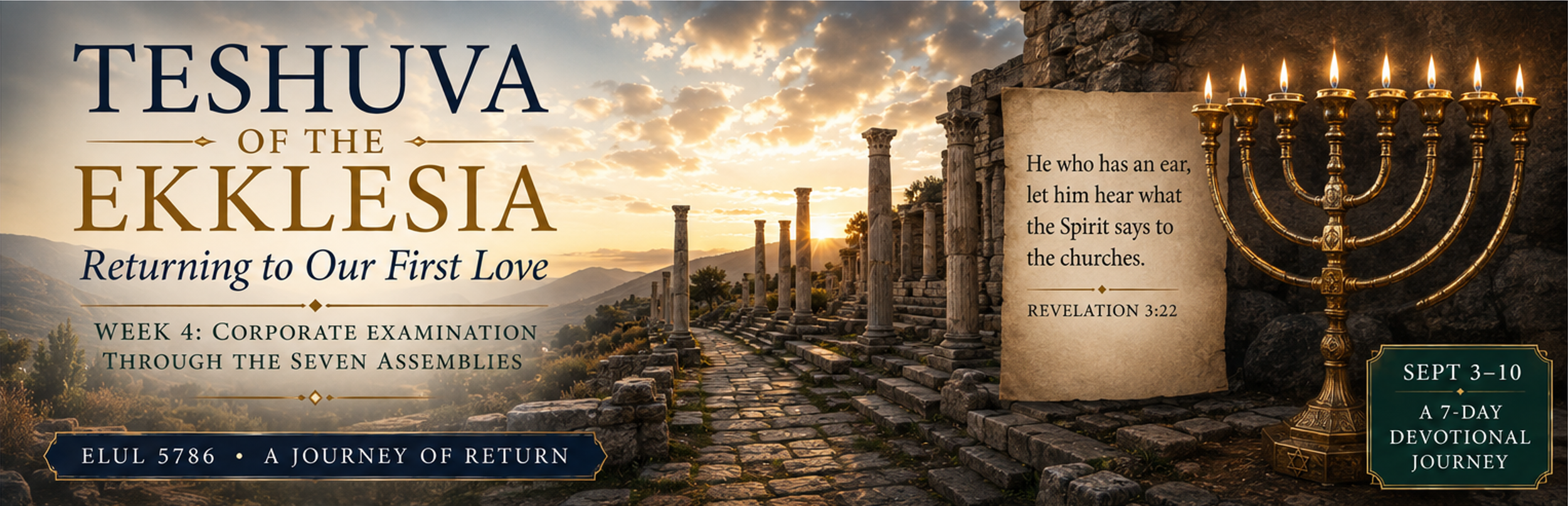

From Genesis to Revelation, Scripture tells the story of God reclaiming what belongs to Him.
And at the center of that story stands something most believers have never been taught to see clearly:
God’s calendar.

But Teshuva does not permit us to stand across the street and critique the house.
If we belong to Yeshua, this is our house.
We began with our own location on the road of return. Last week we searched the inner rooms—the desires, defenses, words, idols, and explanations that can hide what is actually happening in the heart.
Now we cross the threshold.
Teshuva comes home.
Before examining our households, our congregations, Israel, or the nations, we stood where Adam stood and allowed God's question to become personal. Teshuva begins by telling the truth about where we are and then turning toward where God intended us to be.
Elul is the signal to turn our attention Godward, because His appointed times, His moedim (Lev 23:1-4), are close now. One practical expression of that focus: …
From Genesis to Revelation, Scripture tells the story of God reclaiming what belongs to Him.
And at the center of that story stands something most believers have never been taught to see clearly:
God’s calendar.
Here's a one paragraph excerpt:
In this insightful article, we embark on a profound exploration of the biblical feasts and their intrinsic connection to God's ultimate plan for humanity. Tracing the historical divergence between the Passover and Easter celebrations, we uncover the unfortunate disconnect that occurred when the early church, influenced by prevailing anti-Jewish sentiments, intentionally separated Easter from its Jewish roots at the Council of Nicaea in 325 CE. As we delve into the Summer Feast of Pentecost, we unravel its deep symbolism and continuity with God's promised plan, set in motion at creation itself. Through this illuminating journey, we are invited to rediscover the sacred calendar instituted by God, transcending cultural boundaries, and gain a renewed appreciation for these divinely appointed times that foreshadow the climactic events of the Apocalypse and the glorious return of Christ.
In this second installment, we delve into God's divine 'judgment' as a manifestation of His deep love for creation. The act of 'seeing' and declaring 'good'-ness in Genesis 1 sets the stage for understanding Jesus as the compassionate judge, mirroring the divine pattern. Explore how 'good' in God's eyes doesn't mean perfection but purpose, aligning with His original intent. Join us on this journey of divine alignment, human potential for 'good'-ness, and the redemptive grace found in Jesus.
Read more to uncover the profound implications of God's judgments and humanity's enduring potential for goodness, despite the impact of sin.


