
The journey of Teshuva does not end with Yom Kippur.
In fact, Yom Kippur points us somewhere.
It points beyond repentance, beyond confession, beyond judgment, and beyond atonement—to the presence of the King.
That is where Sukkot takes us.

Discover how God's promises to Abraham echo Genesis 1—and reveal a purpose the Creator has never abandoned.
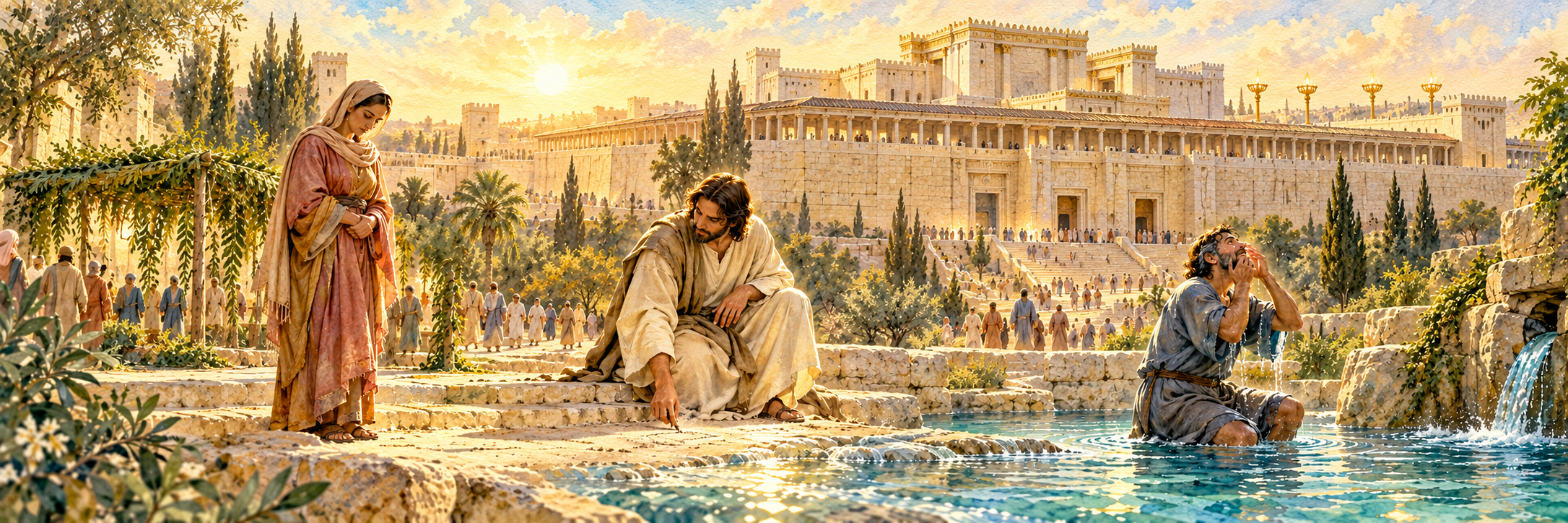
What might we discover in John 7–9 when we hear Yeshua’s words within the festival already surrounding Him? A Shemini Atzeret reflection on Sukkot, living water, restored sight, and the King whose righteous judgments reveal God’s purpose for His creation.
The journey of Teshuva does not end with Yom Kippur.
In fact, Yom Kippur points us somewhere.
It points beyond repentance, beyond confession, beyond judgment, and beyond atonement—to the presence of the King.
That is where Sukkot takes us.
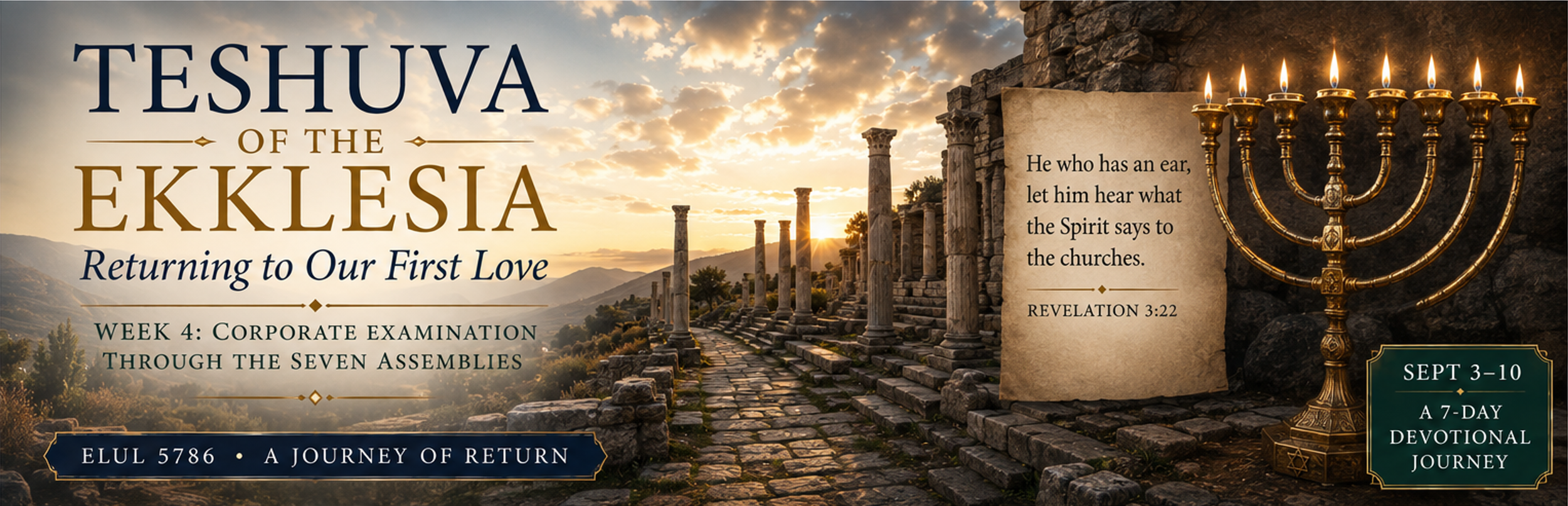
This final week is shorter than our earlier seven-day cycles, bringing us to Yom Kippur. We will move through five themes: the seriousness of sin, God's provision of atonement, the Messiah's saving work, the humility of standing before God, and the continuing life of faithful return.
But Teshuva does not permit us to stand across the street and critique the house.
If we belong to Yeshua, this is our house.
The Christmas story is often wrapped in sentimentality—soft lights, serene nativity scenes, and cozy traditions. Yet, the reality of the first Christmas is strikingly different. It’s messy, disruptive, and deeply transformative. From Mary’s scandalous “yes” to God, to the chaos of a birth in a stable, the story invites us to step into the unfolding work of redemption.
Mary’s encounter with the angel Gabriel was not a moment of comfort but a call to trust and surrender amidst uncertainty. Her obedience echoes the creation story, where God brought order out of chaos, and reminds us that redemption often unfolds in the messiness of life.
This Christmas, as we reflect on Mary’s faith, may we recognize that God is still working through the chaos of our lives. Like Mary, we’re invited to say “yes” to God’s story—a story that transforms mess into meaning, bringing light and life to a broken world.
The Genesis account is often read as an origins story. And that it is. As an origins story, it retells the ancient Mesopotamian and Egyptian myths couched in the god stories of the ancients. It corrects those accounts and reveals the One God who has always been the primal cause but whose priority has been let to drift in the memory of His creation. His creation had written its own counterfeit stories. Even yet, these myth stories had echoes of truth that God would now re-reveal to His Israelite prodigies on their way to inherit a promise He had set for them from the beginning.


